Table of contents
- What is the difference between W5 and W55 stainless steel components?
- What characterises W5 stainless steel at STAUFF?
- What does the code W55 actually stand for?
- How manufacturing, surface treatment and handling influence corrosion resistance
- Why W55 is a performance standard and not a material grade
- Typical applications for W5 and W55 components
- FAQs

What is the difference between W5 and W55 stainless steel components?
The difference between W5 and W55 stainless steel components at STAUFF lies not only in the base material, but above all in the level of control applied during manufacture, surface treatment and handling.
W5 refers to standard stainless steel components manufactured using conventional industrial processes and suitable for general operating environments.
W55, on the other hand, defines a controlled standard of quality and performance for applications where corrosion resistance plays a crucial role. This includes strict control of impurities, advanced surface treatment processes and clearly defined specifications for handling and storage.
As a result, W55 components offer significantly higher corrosion resistance, improved surface purity and greater long-term reliability, particularly in demanding environments.
What characterises W5 stainless steel at STAUFF?
Within the STAUFF material system, W5 denotes a standard stainless steel grade. These components are generally manufactured using established production processes and common stainless steel grades.
They are particularly suitable for applications where:
environmental conditions are moderate,
no exceptional corrosion risks are to be expected,
cost-effectiveness is an important factor.
W5 components offer reliable performance in numerous industrial applications, but are not specifically designed for contamination-critical or highly corrosive operating conditions.
What does the code W55 actually stand for?
The code W55 is not merely a material designation, but an internal STAUFF quality and performance standard for metallic components featuring ACT (Anti-Corrosion Technology).
It stands for:
controlled manufacturing processes,
defined quality assurance requirements,
a specified target level for corrosion resistance and surface finish.
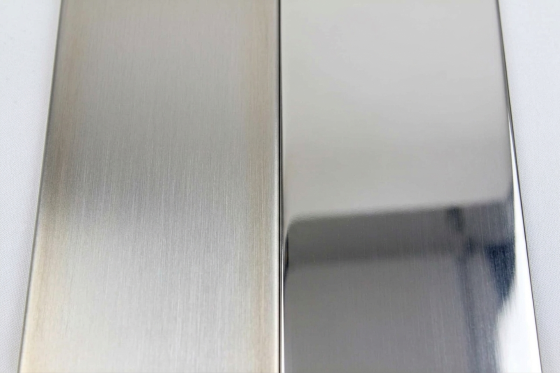
W55 components are manufactured using qualified and validated processes in production, assembly and handling. These processes are designed to prevent or remove surface contaminants in order to keep the material surface as clean as possible and to achieve a level of corrosion resistance that exceeds that of untreated stainless steel.
In doing so, W55 explicitly defines the desired outcome rather than a fixed manufacturing or surface treatment method. This enables continuous further development whilst maintaining consistent product performance.
How manufacturing, surface treatment and handling influence corrosion resistance
Corrosion resistance is not determined solely by the material composition. The condition of the surface and the absence of contaminants also have a significant influence.
W55 components are specifically designed to minimise these risks:
Metallic and non-metallic impurities are largely eliminated during manufacturing, machining and handling.
Surface treatments remove impurities and, where necessary, improve the surface structure.
Clean surfaces reduce the risk of corrosion initiation points.
Furthermore, strict guidelines for handling and logistics form an integral part of the W55 standard:
ACT fastening components are supplied in hermetically sealed packaging to prevent contamination during transport.
Components must be stored separately from carbon steel and other metals.
Suitable tools must be used during assembly to prevent the introduction of foreign particles.
These measures are crucial, as even minor contamination can significantly reduce the corrosion resistance of stainless steel in demanding operating conditions.
Why W55 is a performance standard and not a material grade
A key difference is that W55 defines performance rather than the composition of the material.
This means:
The focus is on corrosion resistance, cleanliness and long-term durability.
Manufacturing methods can be further developed, provided that the performance requirements are met or exceeded.
All components are subject to comprehensive validation, testing and quality control.
This approach ensures that W55 products offer the following:
consistent corrosion resistance,
high surface quality,
reliable mechanical integrity throughout their entire service life.
By separating performance requirements from specified manufacturing methods, STAUFF ensures that W55 remains compatible with the latest manufacturing technologies whilst meeting a clearly defined quality standard.
Typical applications for W5 and W55 components
W5 and W55 components are used in different applications depending on the level of corrosion exposure.
W5 is typically used in:
general mechanical and plant engineering,
applications with limited exposure to aggressive media.

W55 is the preferred choice for:
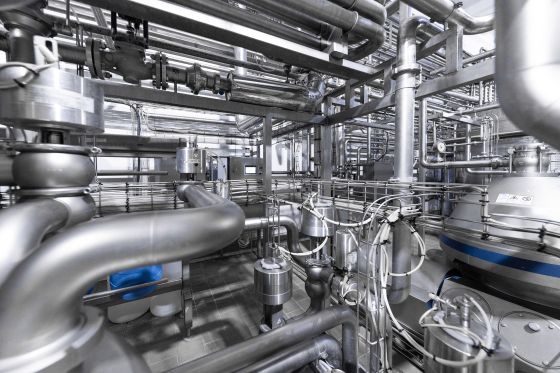
offshore and marine applications,
oil and gas installations,
the chemical and process industries,
environments with high humidity or exposure to salt water,
applications with high demands on service life and low maintenance.
In these environments, the added benefits of W55 become a decisive factor in ensuring system reliability and optimising life-cycle costs.
FAQs
What is the main difference between W5 and W55 stainless steel at STAUFF?
W5 refers to standard stainless steel components. W55, on the other hand, defines a controlled manufacturing and quality standard that ensures enhanced corrosion resistance and a particularly high level of surface purity.
Is W55 a different type of stainless steel?
No. W55 is not a separate material grade. The designation is based on performance requirements and focuses on manufacturing control, surface treatment and defined handling conditions.
Why are impurities so important for corrosion resistance?
Impurities can create weak spots on the stainless steel surface where corrosion begins. Minimising such impurities significantly improves long-term resistance.
What role do handling and storage play with W55 components?
A crucial role. W55 components are supplied sealed, stored separately from other metals and require clean assembly conditions to ensure that their corrosion-resistant properties are maintained.
When should W55 be specified instead of W5?
W55 should be used in applications with an increased risk of corrosion, such as in offshore and marine environments, in the oil and gas industry, or in chemical processing plants.

Newsletter Sign-up
Sign up now and never miss another post!