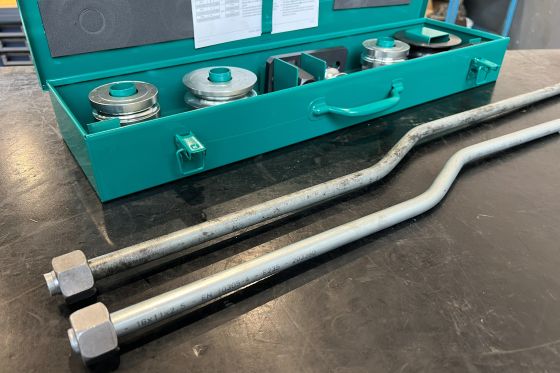
A user story from our customers’ day-to-day operations
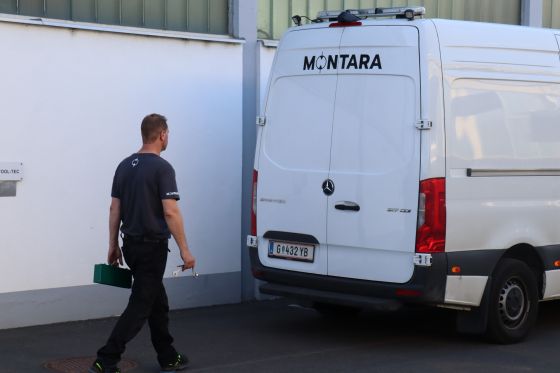
This case study was provided to us by our customer Montara. It allows us to demonstrate how STAUFF products are used in real-world applications.
MONTARA GmbH is a hydraulics service provider based in Graz (Austria). The company offers the assembly, repair and manufacture of hydraulic systems, as well as suitable Spare Parts and bespoke solutions for a wide variety of applications.
Why do supposedly quick repairs often become a problem?
Not every quick repair is a good repair. With hydraulic systems in particular, minor errors in preparation can lead to a problem that was thought to have been resolved reoccurring shortly afterwards.
This is exactly what happened to the operator of a lorry-mounted crane. It all started with a leaking cutting ring connection on a bent pipe. To rectify the fault as quickly as possible, the pipe was first shortened by another hydraulic service provider, fitted with a new Cutting Ring and a new nut, and reinstalled using an additional connector.
The solution initially seemed workable. However, immediately after the repair, it became apparent that the problem had not been resolved. The connection remained leaky.
The operator then contacted MONTARA GmbH. Upon analysing the existing repair, it quickly became clear why the initial solution could not have worked: the pipe had been cut at an angle, the Tube Ends had not been properly deburred, and the quality of the workmanship did not meet the requirements for a permanently leak-tight cutting ring joint.
This case impressively demonstrates that, with hydraulic pipe systems, it is not just the end result that counts. The quality of the individual work steps alone determines the reliability of the entire joint.
When a repair fails to address the root cause
Leaky hydraulic connections are often caused not by individual components, but by errors in the manufacturing process.
If only a Cutting Ring is replaced or an additional connecting element is fitted, the actual cause often remains. This significantly increases the risk of leaks, rework and further failures.
In this particular case, the initial repair actually made the situation worse. Instead of completely replacing the damaged pipe, the existing pipe was shortened and fitted with an additional connector. At the same time, the necessary care was not taken when preparing the Tube End.
However, several factors are crucial for a cutting ring connection:
Tube ends cut at right angles
clean internal and external edges
proper deburring
pipes that are as clean and free of particles as possible
precise finishing of all components
Even minor deviations can result in the joint failing to remain permanently leak-tight.
Why the quality of pipe machining is crucial
Hydraulic Tube Fittings operate at high pressures and must function reliably over the long term. That is why the quality of pipe machining plays a far greater role than it might appear at first glance.
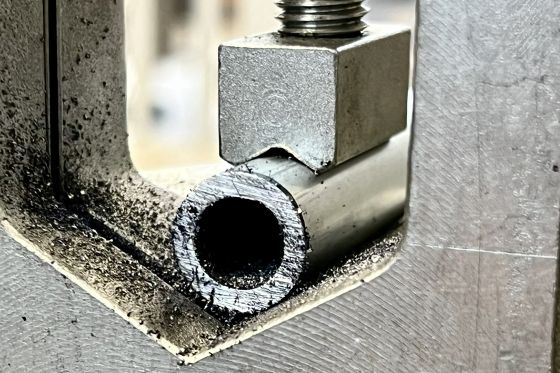
A slanted cut can prevent the Cutting Ring from sitting flush against the pipe. Burrs can interfere with assembly and create unwanted stresses. Furthermore, if metal shavings or other contaminants are not removed, additional problems may arise within the system.
That is why a professional repair does not begin with the assembly of the joint, but rather with the preparation of the pipe.
If the individual steps are carried out precisely, this lays the foundation for a secure and durable connection.
How Montara created a permanent solution using STAUFF tools
Instead of readjusting the existing repair, Montara opted for a different approach: the damaged pipe was completely replaced.
On site, the team fabricated a new bent pipe that met the original application requirements. Various tools from the STAUFF range were used for this, including the pipe-cutting device, the Manual Tube Bender, the pipe deburrer and the appropriate drill adaptor.
By fabricating the new pipe, it was possible to avoid the need for the additional joint that had been created as a stopgap measure. At the same time, this ensured that all machining steps were carried out professionally.
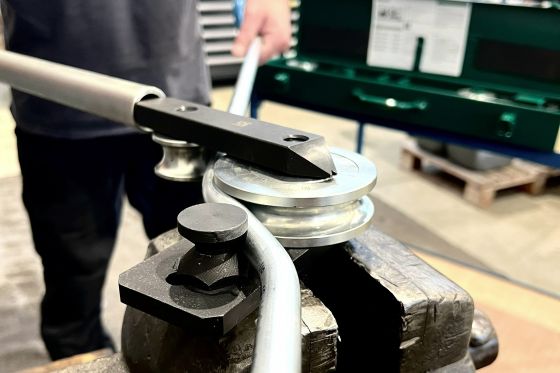
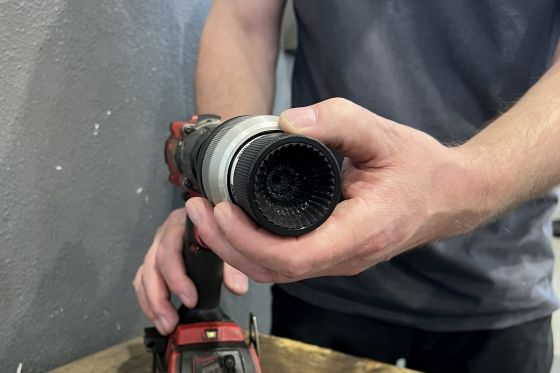
The result was not just another stopgap solution, but a permanently functional pipe assembly that restored the safe operation of the lorry-mounted crane.
This real-world example thus clearly illustrates the difference that professional pipe machining and the right tools can make in day-to-day hydraulic servicing.
Small tools with a big impact
What is particularly interesting about this example is that the decisive differences are not evident in large machines, but in comparatively small tools.
Deburring, in particular, is often regarded as a minor step in day-to-day work. In fact, however, it is one of the most important steps in pipe machining.
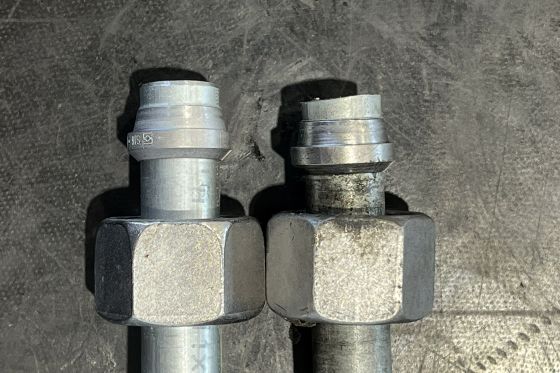
The comparative images taken during the job clearly show the impact that the quality of the tool can have on the machining result. Whilst poorly machined Tube Ends increase the risk of leaks, cleanly deburred and correctly prepared Tube Ends lay the foundation for a reliable connection.
This is precisely why it is worth paying attention to quality, even when it comes to seemingly minor tools. After all, it is often not the most labour-intensive step that determines the success of a repair, but rather the attention to detail.
FAQs
Why do cutting ring joints start to leak?
Common causes include pipes cut at an angle, burrs, contamination or errors during assembly. Even minor deviations can compromise the seal.
Why is deburring hydraulic pipes important?
Deburring removes sharp edges and residual material. This ensures that cutting ring joints can be fitted correctly and reduces the risk of leaks.
Why can temporary repairs lead to additional costs?
If the root cause of a problem is not addressed, this often results in rework, further failures and additional downtime.
What are the advantages of manufacturing a new pipe run?
A newly manufactured pipe provides a solution that meets the original requirements and avoids unnecessary additional joints.
What role do tools play in pipe fabrication?
Tools influence the quality of processes such as sawing, deburring and bending. Precise tools help to create reliable and durable joints.

Newsletter Sign-up
Sign up now and never miss another post!